
 10,000+ Happy Customers
 9hr+ Lasting.
 Pan India Delivery
 Fast Delivery

Every perfume description reads like a wine menu written by a poet. “Top notes of bergamot, a heart of jasmine, a base of sandalwood and tonka bean.” Cool. What does any of that actually smell like?
This glossary cuts the mystique. Plain English, honest descriptions, and what each note does to a fragrance.
First, the Three Layers
A perfume isn’t one smell — it’s three, revealed over time.
- Top notes — the first 15 minutes. Bright, sharp, designed to grab attention. Usually citrus or herbs.
- Heart (middle) notes — 15 minutes to 3 hours. The “personality” of the perfume. Florals, spices, fruits.
- Base notes — 3+ hours until it fades. The dry-down. Woods, musks, resins. This is what people remember.
When someone says a perfume “dies in an hour,” what they usually mean is *the top notes died* and the base isn’t strong enough to carry.
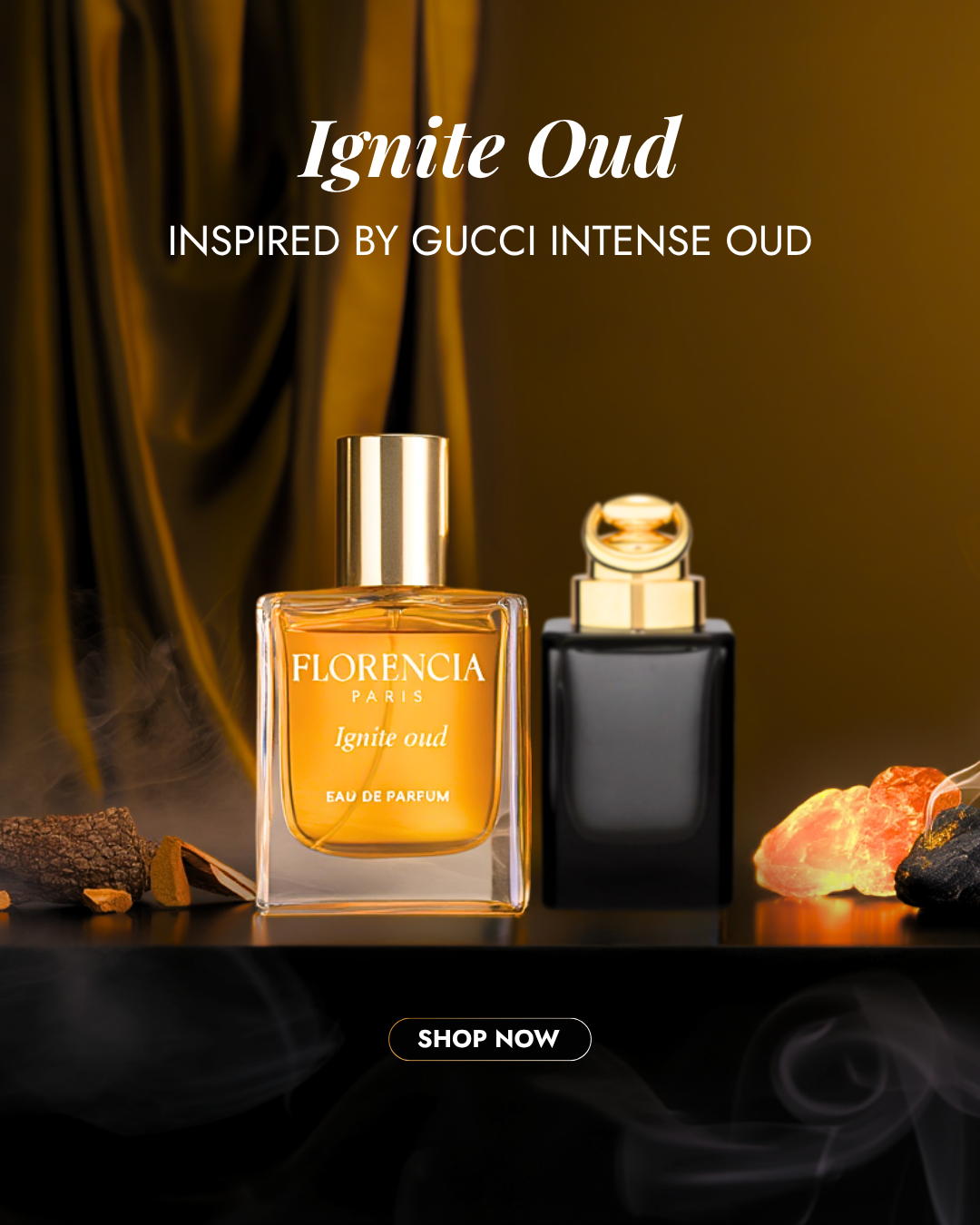
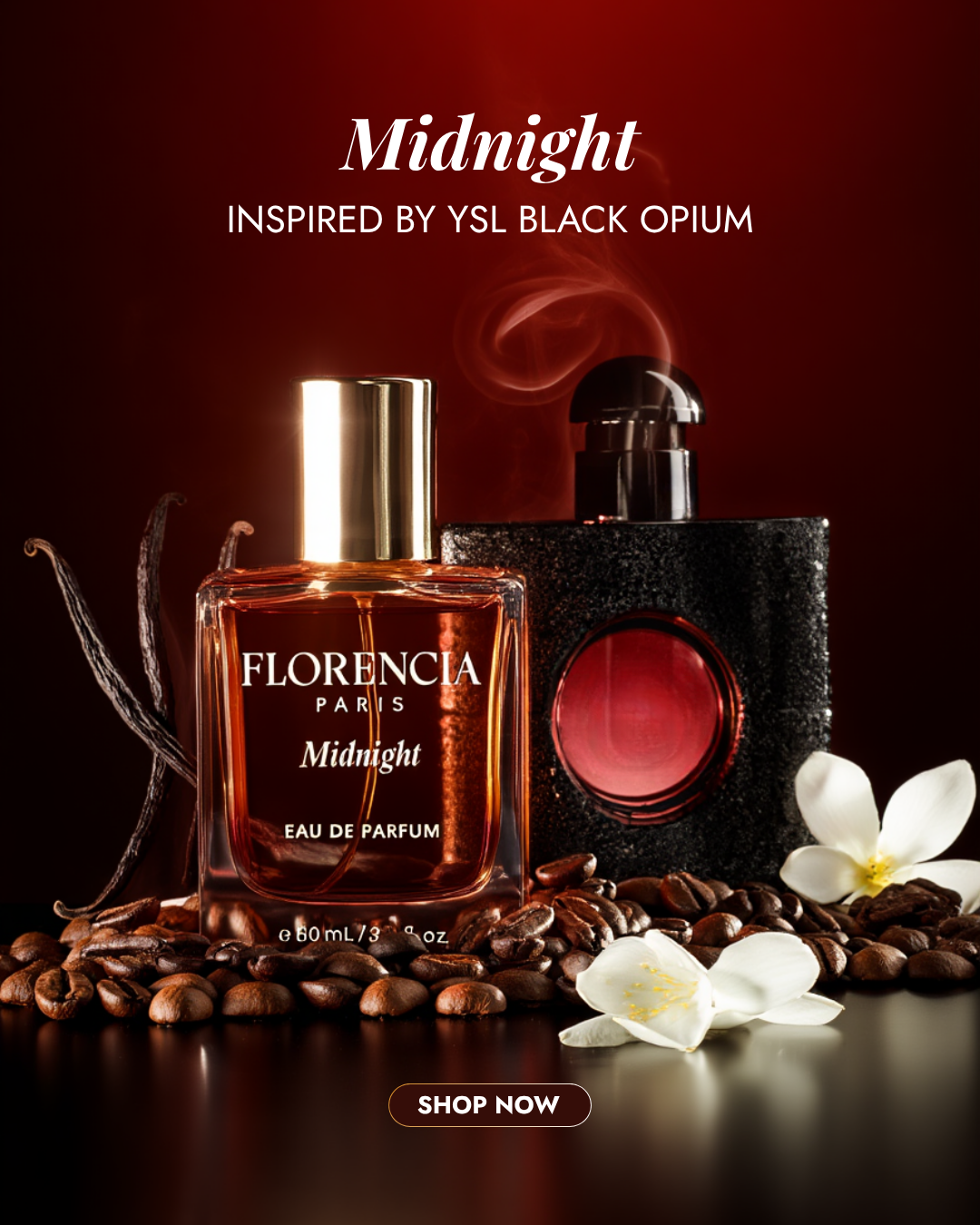
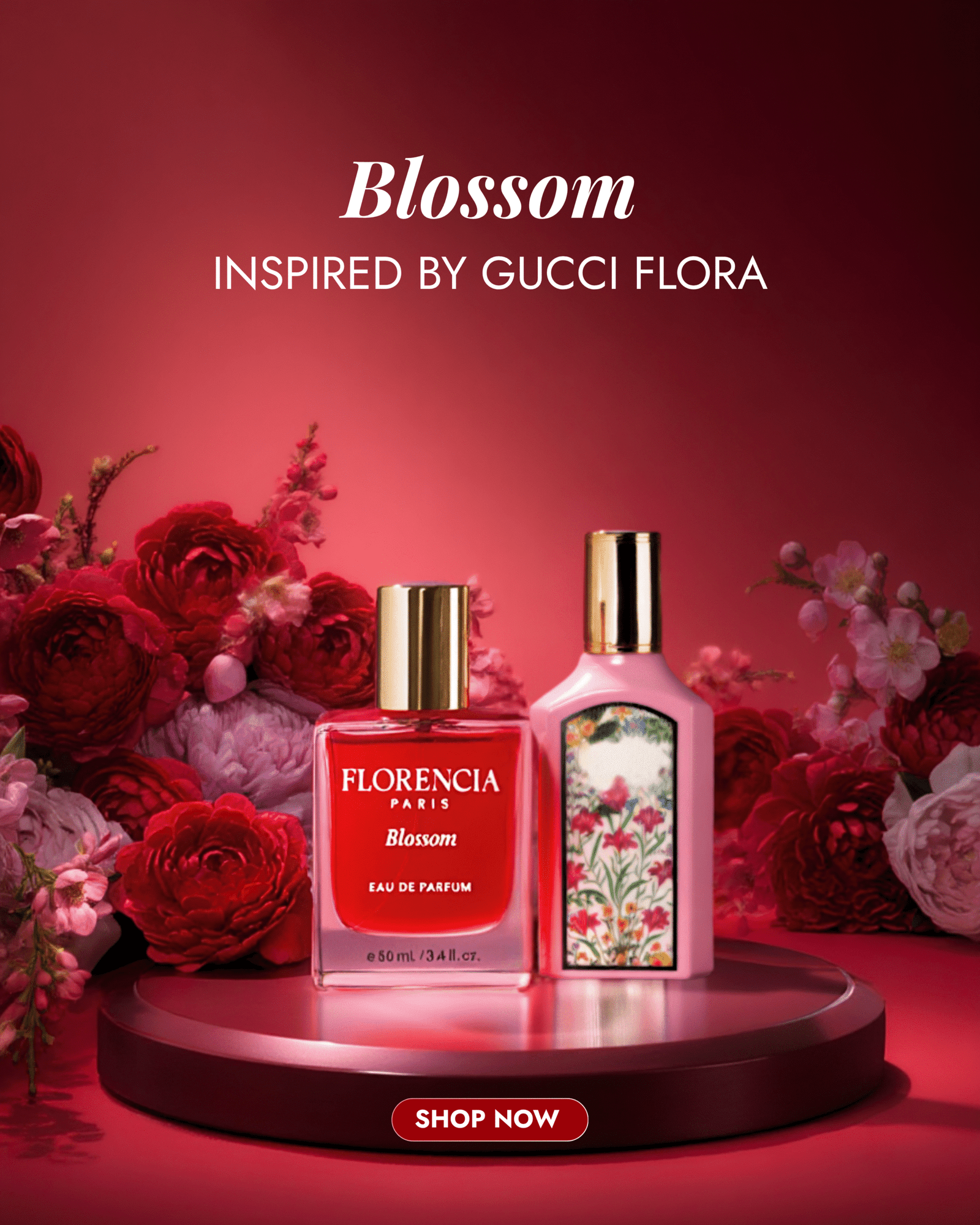
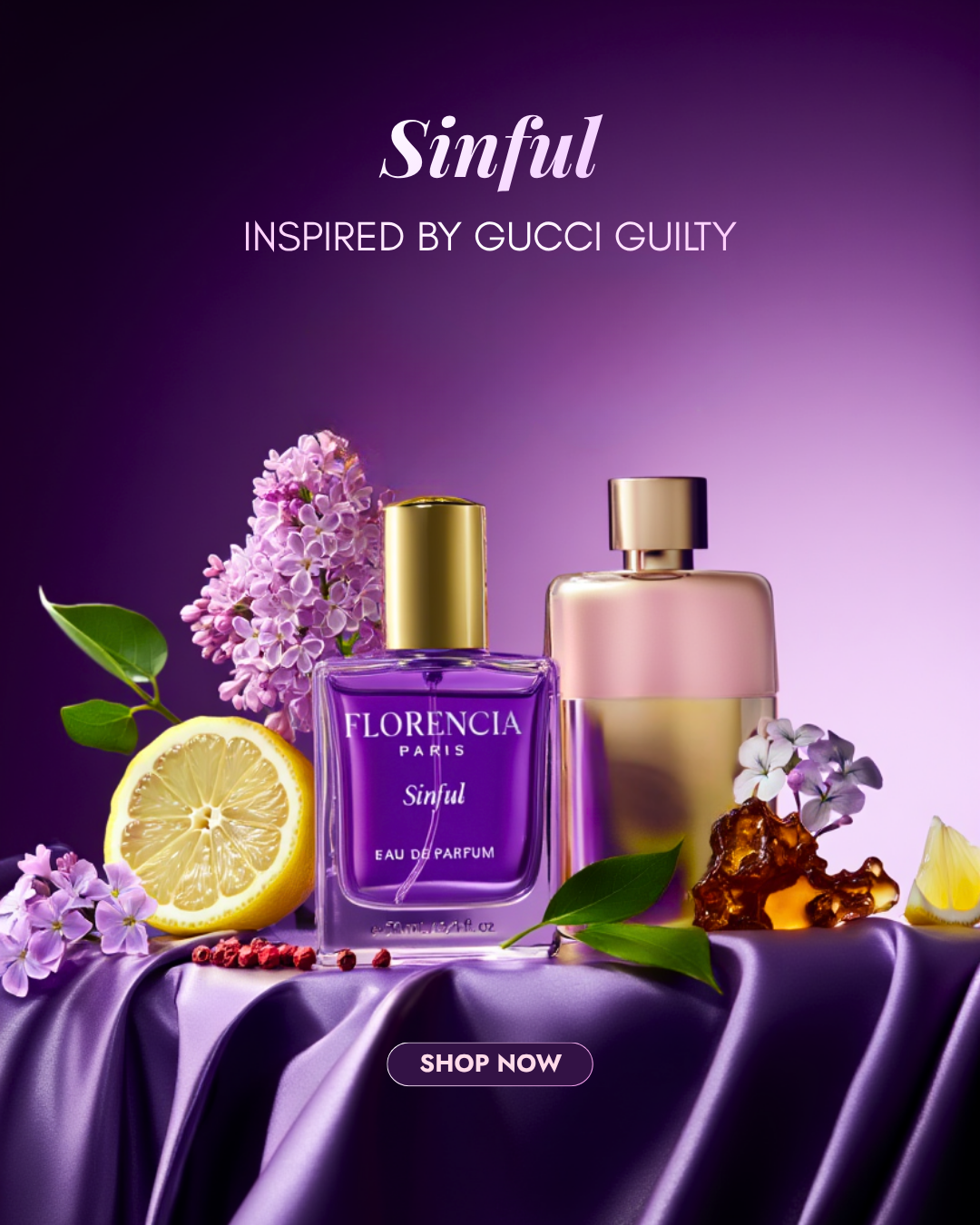
Shop the Florencia Picks
The Most Common Notes (A–Z)
Amber
Warm, sweet, slightly powdery. Not an actual tree resin — it’s a blend of labdanum, vanilla, and benzoin. Feels like “warm skin in winter.” Common in Florencia Ignite Oud.
Bergamot
A bitter orange from Italy. The most common top note in perfumery. Bright, slightly floral, slightly citrus. Think Earl Grey tea.
Cardamom
Spicy, a little sweet, a little cool. Heart note. Gives perfumes an “Indian masculine” edge. Used in Florencia Midnight.
Cedar (Cedarwood)
Dry, pencil-shaving woody. Backbone note for masculine fragrances. Sober, clean.
Coumarin
Almond + fresh-cut hay. Warm, slightly sweet. The secret weapon in half of all men’s perfumes — you’ve smelled it a thousand times without knowing its name.
Gardenia
Creamy, slightly tropical white floral. Heavier than jasmine. The signature of Gucci Flora and its dupes.
Iris
Powdery, cool, slightly carroty. Luxurious and expensive in the real world, rare in dupes.
Jasmine
Sweet, narcotic, heady white floral. The backbone of most feminine perfumes. Can tip into “too much” fast.
Labdanum
Sticky, resinous, leathery-sweet. The soul of “amber” accords.
Musk
Modern musks are clean, skin-like, slightly soapy. (Old-school animal musk is banned — don’t worry.) Musk is the “invisible glue” that makes a perfume smell expensive.
Oakmoss
Damp-forest, earthy, slightly bitter. The classic “chypre” base. Older feminine perfumes live and die on oakmoss.
Osmanthus
Apricot + leather + tea. Rare, beautiful, slightly fruity floral.
Oud (Agarwood)
The big one. Oud is the resinous infected wood of the agar tree — smoky, woody, slightly sweet, sometimes animal. Real oud is absurdly expensive; most dupes use synthetic oud accords that still smell great. Florencia Ignite Oud is built around it.
Patchouli
Earthy, slightly sweet, slightly medicinal. Polarizing. Modern patchouli is cleaner than the hippie-era stuff.
Peony
Light, fresh floral. Less heady than jasmine, less creamy than gardenia. Feminine but modern.
Rose
Two kinds: Bulgarian (jammy, classic) and Damascus (sharper, slightly metallic). A rose note can be feminine OR masculine depending on what’s around it.
Sandalwood
Creamy, soft, warm wood. The opposite of cedar. Used in base notes to soften everything else.
Tonka Bean
Vanilla + almond + hay. Close cousin of coumarin. Sweet, warm, slightly boozy.
Vanilla
You know vanilla. In perfume it’s warmer, boozier, less dessert-like than baking vanilla. A cornerstone of gourmands.
Vetiver
Dry, smoky, earthy root. Masculine, elegant. A favorite in summer perfumes because it stays cool in heat.
Ylang Ylang
Tropical, creamy, almost banana-like floral. Rich and heady.
How to Read a Fragrance Pyramid
When you see:
> Top: Bergamot, cardamom
> Heart: Jasmine, rose
> Base: Sandalwood, oud, musk
…read it as: *”bright citrusy spice → floral middle → warm woody dry-down.”* That’s a Florencia Midnight-style profile.
Pick Notes That Suit Indian Weather
- Summer: vetiver, bergamot, peony, cedar
- Monsoon: rose, jasmine, patchouli
- Winter: oud, amber, tonka, vanilla, sandalwood
Bottom Line
You don’t need to memorize every note. You just need to know your own base — “I like warm and sweet” or “I like fresh and woody” — and then read the pyramid before you buy.
Up next: Best Perfume Gift Sets Under ₹1500 for Raksha Bandhan
Ready to Upgrade Your Fragrance Game?
Structure terms
| Term | Meaning |
|---|---|
| Accord | A blend of notes that acts as a single ‘smell’ (e.g., a ‘marine accord’ combines several molecules to smell like the ocean) |
| Note | A single identifiable scent ingredient in a fragrance (e.g., rose note, vanilla note) |
| Pyramid | The 3-layer structure of a fragrance: top, heart, base |
| Top notes | First 0–30 minutes — citrus, herbs, aquatic |
| Heart notes | 30 minutes–4 hours — florals, spices, the ‘character’ |
| Base notes | 4–10+ hours — musk, vanilla, oud, woods |
| Drydown | The late-stage scent (base notes only) — what you smell 6+ hours in |
Performance terms
| Term | Meaning |
|---|---|
| Sillage | The trail you leave when you move — French for ‘wake’ |
| Projection | The radius of your scent bubble in still air |
| Longevity | Total hours the perfume remains detectable on skin |
| Beast mode | A scent with huge projection, huge sillage, and 10+ hour longevity |
| Skin scent | When the fragrance sits close to the skin — intimate, detectable only up close |
| Compliments | How often strangers comment — slang for a scent that gets noticed |
Concentration terms
| Term | Meaning |
|---|---|
| Parfum / Extrait | 20–40% fragrance oil — the strongest |
| EDP (Eau de Parfum) | 15–20% oil — most common for premium fragrance |
| EDT (Eau de Toilette) | 5–15% oil — lighter, shorter |
| EDC (Eau de Cologne) | 2–5% oil — splash-style, short wear |
| Body mist | 1–3% oil — dies fast, not a real perfume |
Ingredient & chemistry terms
| Term | Meaning |
|---|---|
| Ambroxan | Synthetic amber molecule — the modern clean-masculine signature |
| Aldehyde | Sparkling, soapy, ‘champagne bubbles’ synthetic family — Chanel No 5’s signature |
| Iso E Super | Woody, transparent, commonly used as a modern ‘glow’ note |
| Oud | Resinous fragrant wood from infected Aquilaria trees — Arabic/Indian luxury ingredient |
| Civet / Musk | Animalic base notes — mostly synthetic in modern perfumery |
| Coumarin | Sweet, hay-like molecule — core of the fougere family |
Market & buyer terms
| Term | Meaning |
|---|---|
| Niche | Small-batch artistic perfumery (Creed, Kilian, MFK) |
| Designer | Mass-market luxury (Dior, YSL, Chanel) |
| Dupe / Inspired-by | Affordable reformulation of a designer scent |
| Flanker | A variation of an existing perfume (e.g., Sauvage Elixir flanker of Sauvage) |
| Decant | A small (5–10ml) sample transferred from a larger bottle |
| Batch code | Manufacturing code — traces production date and batch |
| Splash bottle | A perfume bottle without a spray — you tip liquid out |
| Atomiser | The spray mechanism on a bottle |
Experience & safety terms
| Term | Meaning |
|---|---|
| Olfactory fatigue | Your brain filtering out a consistent smell — why you stop smelling your own perfume |
| Patch test | Testing on inner elbow for 24 hours to check skin reaction |
| IFRA | International Fragrance Association — global safety standards |
| Maceration | Aging period (weeks/months) where the fragrance matures after bottling |